
"exported to the United States"
800 article(s) found

China becomes the sixth largest importer of American wine
The United States is the fourth largest wine producer in the world, after France, Italy and Spain. All 50 states produce wine, while California produces 89% of the country's wine. According to United States law of April 2007, there are now 187 designated grape growing areas in the United States. Recently, Vinepair, a well-known wine blog, counted the number of American wines produced in 2013.

Introduction to the characteristic flavor and taste varieties of El Salvador coffee manor with fragrant and mild taste
The judicial power of El Salvador is exercised by the Supreme Court, the Procurator-General's Office, etc. The Supreme Court is composed of 15 judges (including the President) and is elected by Parliament. The President of the Supreme Court shall serve for a term of five years and shall be eligible for re-election. Judges are appointed for a term of nine years, with 1/3 re-elected every three years. The Attorney General shall be elected by Parliament for a term of three years and shall be eligible for re-election. President of the Supreme Court, Oscar Armando Pinedanavas.
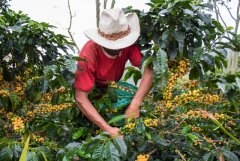
Global coffee supply surplus Vietnam's coffee exports fell in volume and price in 2019
For more information on coffee beans, please follow the coffee workshop (Wechat official account cafe_style) according to statistics from Vietnam's Ministry of Agriculture and Rural Development, Vietnam exported 943000 tons of coffee in the first half of 2019, with an export value of US $1.6 billion, down 9.2% and 19.9% respectively from the same period last year. The main export markets of Vietnamese coffee are Germany and the United States, accounting for the export market of Vietnamese coffee respectively.

Introduction to San Pedro Manor with a strong flavor of Puerto Rican coffee
Puerto Ricans are the general name of the residents of United States Puerto Rico in Central America and the Caribbean. There are about 3.4 million people (1979). Spanish and English are widely used. More Catholic. The earliest inhabitants of Puerto Rico were Arawak and Caribbean Indians. In 2012, whites of European origin accounted for about 73% of the population, mixed-race people accounted for 23%, and blacks accounted for 4%. There are more than 20,000 Americans and others.

Costa Rican Tarazu Coffee Bean Flavor description method Variety characteristics and taste introduction
Costa Rican coffee beans Gome established diplomatic relations in 1851. The two countries have close relations and frequent exchanges of high-level visits. The United States is Colombia's largest trading partner. In 2007, Colombia exported 1.142 billion US dollars to the United States and imported 2.865 billion US dollars from the United States. The United States has always regarded Colombia as a model for democracy in Latin American countries and provided a lot of economic assistance. The two sides have maintained close cooperation in anti-terrorism, drug control, military and other fields. The United States has Latin America in Colombia.

Introduction to the characteristics of the manor producing area of Colombian boutique coffee beans with strong taste
The land of the District of Columbia [2] originally came from Maryland and Virginia. When the District of Columbia was founded, the north bank of the Potomac River included Georgetown (Georgetown,D.C.), Washington City (Washington City,D.C.) and Washington County (Washington County,D.C.). In 1878, the three places merged into Washington, D.C., and the city of Washington.

Coffee cultivation and development in Cuba
Coffee farming in Cuba began in the mid-18th century, with the first coffee farm established by Don Jos Gelabert in Wajay, outside Havana, in 1748. A large number of French and submarine immigrants followed after the outbreak of the Haitian Revolution in 1789.
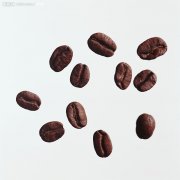
For Europe and the United States, the ranking of rinsing Lim is second only to Yega Schiffe.
Limu grows in the southern western highlands of Ethiopia (border between Shewa and Sidmo provinces) east of Jima and north of West Dharma. it is preferred by most Europeans and Americans at an altitude of 3600-6200 feet. Its annual output is about 110000bags/60kg, and most of the beans are round (15/16scr). The color is green and bluish, the export is mostly G2 grade, and the taste is similar to that of Yegashev.

Brief Introduction to the Treatment Method of Grindness Roast Degree of High Acidity Angola Fine Coffee Bean
Angola Coffee Features: Flavor: Not available in the West in recent years, but previously known for its high acidity Suggested Roast: Medium to Deep Roast: Average Market for Angola Coffee: Mid-1970s, 98% of Angola's annual coffee exports were Roast (probably the best Roast coffee in Africa), total production, 1990
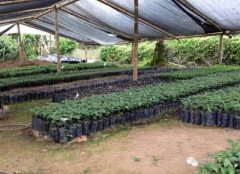
A brief introduction to the cultivation of high-quality Angolan boutique coffee beans, geographical location, climate and altitude
The Secretary-General of the African Coffee Organization (Coffee Organization), Joseph Farrayasarko, said on the 10th that Angola is expected to regain its status as a major coffee producer in the world due to the launch of a nationwide coffee planting campaign. In analyzing the global financial crisis and the situation of the international coffee market, Sako said that there are still gaps in the international coffee market. Angolan coffee should not only improve its output, but also its quality.
Annual report of Honduran Coffee 2017
Highlight of the report: Honduras is the largest coffee producer in Central America and the third largest coffee producer in Latin America, ranking sixth in global coffee exports. Coffee production in Honduras from October 2017 to September 2018 is expected to reach 6.5 million bags, up 4 per cent from last year. For the 2016 / 2017 sales year, at the beginning of 2017, Loeb

A brief introduction to the cultivation of boutique coffee beans in Angola, which are almost impossible to buy, geography, climate, altitude.
In the 1970s, Angola produced about 180000 tons of commercial coffee per year. With an area of 161000 hectares and an annual output of 99550 tons, Uige Province is the largest coffee grower.

Introduction to Larez Yaoke Coffee with Pure, aromatic and heavy Puerto Rican Coffee flavor
On September 23, 1869, the people of Puerto Rico were in R. Under the leadership of Emmetrio Betons, an uprising was held in the town of Larez (known as the voice of Larez in history), which declared the establishment of a republic on the 24th and was later suppressed by the Spanish colonial army. After a long struggle, Puerto Rico was finally granted local self-government by Spain. However, from then on, after the Spanish-American War, the island became an American colony, when

Elegant taste moderately sour Mexican boutique coffee beans cultivation geographical location climate simple altitude
Coffee beans are mainly exported to the United States: Aldura, Mexico. Taste characteristics: large particles, with a strong sweet, sour taste and good aroma. The best barbecue degree: medium fried or body fried. It is characterized by a smooth taste, high acidity, medium mellowness and a slightly nutty finish. Sweet, sour and bitter are neutral, moderately sour, special and elegant. Although the Brazilian

A brief introduction to the History and Culture of the Origin and Development of Coffee beans in Diamond Hill Manor of Costa Rica
The main competitors for high-quality coffee in Colombia are Kenya, Guatemala and Ethiopia. Coffee production in Brazil and Vietnam is mainly in quantity, which is not enough to pose a threat to high-quality coffee in Colombia. In the next five years, my country plans to increase the export volume of high-quality coffee to 70% of all exported coffee. Third, strengthen the export of high-quality coffee to Europe, the United States, Japan and other countries. Living standards in Europe and the United States

A brief introduction to the cultivation of high-acidity Angolan boutique coffee beans, geographical location, climate and altitude
The origin of coffee in Angola: 98% of the coffee in Angola (Angola) is Roberts coffee. The best brands in Angola used to be Ambriz, Amborm and NovoRedondo, all of which are known for their consistent quality. Angola was once one of the largest coffee producers in the world, with coffee production reaching a record 22.5 in 1974

Arabica coffee beans grown in the United States
Pay attention to coffee reviews (Weixin Official Accounts vdailycom ) and find a good coffee shop to open its own small shop. As coffee prices rise in the world market, the Lao Coffee Association hopes coffee growers will increase their income this year. It is reported that Arabica coffee currently sells for about US $3200/ton, while Robusta coffee sells for US $1400/ton. Arabica coffee sold for just $2500 a ton last year.

A brief introduction to the treatment method of grinding degree and baking degree of fine coffee beans in Angola, once a big coffee country.
According to officials, Angola's coffee production is expected to reach 4000 tons in 2006, an increase of 34 percent over 2005. Coffee production increased by 1000 tons between 2005 and 2006. The major coffee producing provinces are Kwanza Sul, Bengo, Kwanza North and Uige.
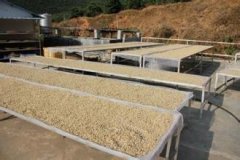
A brief introduction to the Market Price of High acidity Fine Coffee Bean varieties in Angola
Angolan Agriculture Minister Afonso Pedro Kanga revealed that Angolan coffee production this year is expected to double that of last year to 12000 tons. In 2008, in order to regain its status as a major coffee producer in the world, the Angolan government introduced a plan to receive a preferential micro-loan of US $5000 per farmer to grow coffee. Origin of coffee in Angola: 98% of coffee in Angola (Angola) is Luo

Brazilian coffee industry Brazilian coffee bean production and processing technology Brazilian coffee export and sales
Professional coffee knowledge exchange more coffee bean information please follow coffee workshop (Wechat official account cafe_style) Brazilian coffee industry Brazil's coffee industry accounts for about 1/3 of the world's total output, is currently the world's largest coffee producer. Coffee plantations in Brazil cover a total area of about 27000 square kilometers, mainly in Minasji in southeastern Brazil.